IFLEX Robotic In-Mould Labelling Systems for Lids and Tubs
Comtec supplies IFLEX in-mould labelling systems for injection moulding applications in Australia, with IFLEX Core for lids, IFLEX Versa for tubs, and Stäubli robotics for fast, accurate, high-performance IML automation.
In-mould labelling systems for injection moulding, built around real production needs
If you are searching for in mould labelling, IML automation, or an in-mould labelling system for lids or tubs, the real goal is not only to add labels inside the mould. It is to achieve repeatable label placement, stable cycle times, fast changeovers, and reliable production support in an Australian manufacturing environment.
What manufacturers are trying to solve when they look for IML systems
Most buyers looking for in-mould labelling automation are dealing with production pressure, reject risk, or integration headaches. The page should answer those issues clearly, so this content now speaks directly to the practical problems behind the search.
Cycle time pressure
Teams need IML automation that can keep pace with injection moulding output without introducing slow label handling or unstable part extraction.
Label placement errors
Wrinkles, missed picks, poor label registration, and inconsistent placement create rejects, downtime, and lost confidence in the automation cell.
Integration risk
The challenge is not just the robot. It is the full interface between mould, machine, EOAT, label system, controls, and downstream handling.
Changeover delays
Fast product changes matter in real production. Tooling swaps, label cartridge changes, and format flexibility need to be practical, not theoretical.
Quality assurance
Manufacturers often want inline inspection, tooling verification, and reliable end-of-arm handling so that label quality does not depend on manual checks.
Local support
Australian customers want a supplier who can scope, integrate, commission, and support the system locally instead of leaving service gaps after handover.
IFLEX solutions for lid and tub production
The IFLEX range supports robotic in-mould labelling across plastic packaging formats where speed, presentation quality, and repeatability matter. IFLEX Core is the compact IML cell for lid production, while IFLEX Versa is configured for tub applications where broader flexibility and wider integration scope are required.
IFLEX Core for lids
Compact robotic cell for fast lid production with integrated label placement and part extraction.
IFLEX Versa for tubs
Dedicated tub-focused platform for broader product flexibility and wider cell integration requirements.
Injection moulding integration
Designed to interface directly with the injection moulding machine and fit within practical production layouts.
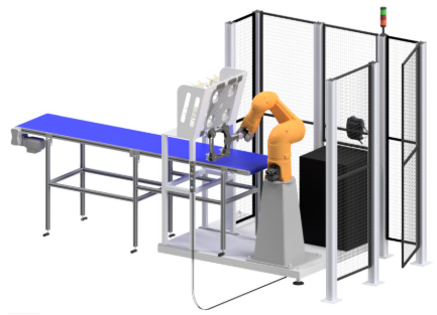
IFLEX Core for Lids
IFLEX Core is the compact IFLEX platform for lid production, combining label placement and part handling in a space-efficient robotic cell for injection moulding environments.
IFLEX in operation
The media below shows the IFLEX system in context, from the full machine-connected layout through to the end-of-arm tooling and tub-focused Versa platform. This helps the page cover the practical buying questions behind terms like IML robot, in mould labelling system, and injection moulding automation.
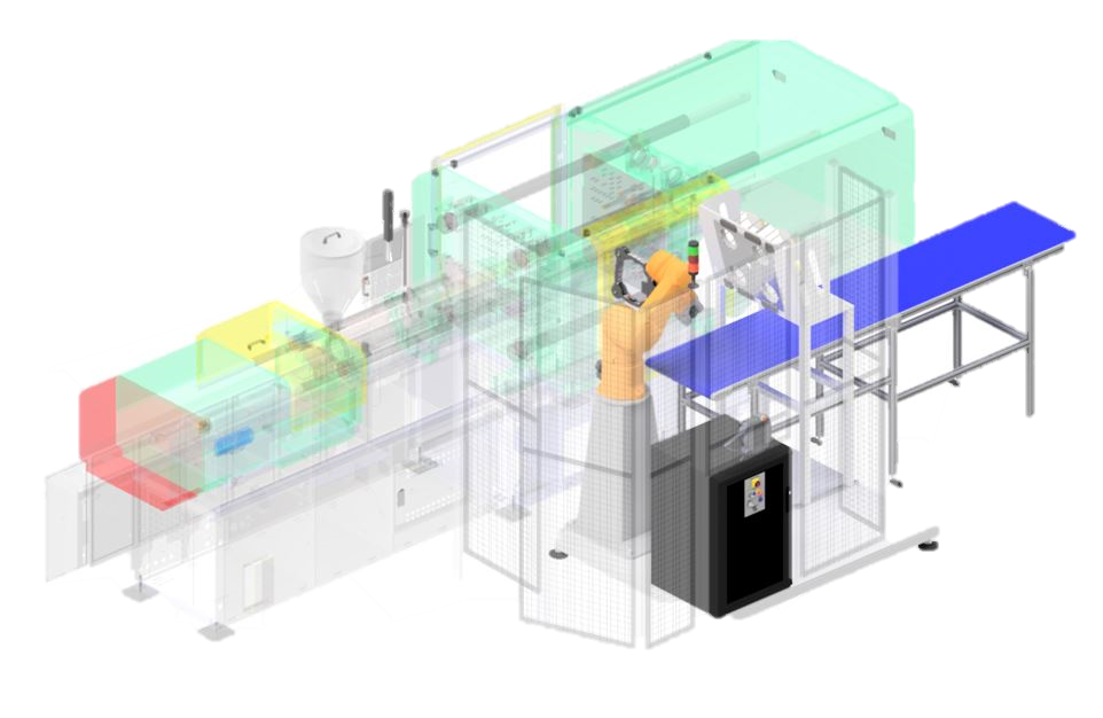
Full System Layout
This machine-connected view shows how the IFLEX system sits alongside the injection moulding machine in a practical production layout.
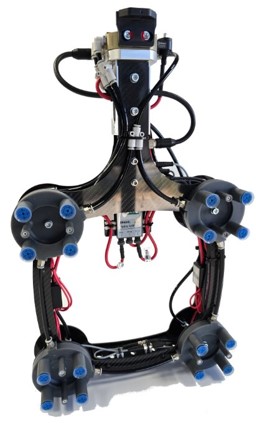
End of Arm Tooling
A custom EOAT combines product and label suction heads, vacuum management, and quick-change functionality for fast servicing and repeatable in-mould label placement.
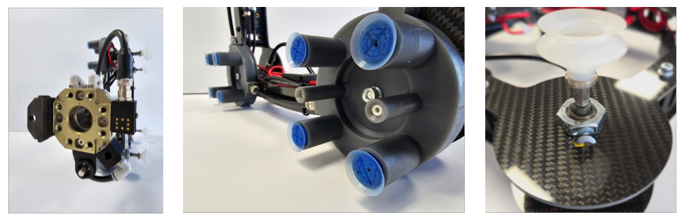
Tooling Detail
This closer view supports the integration story around robotic handling, vacuum distribution, and fast product changeovers inside the cell.
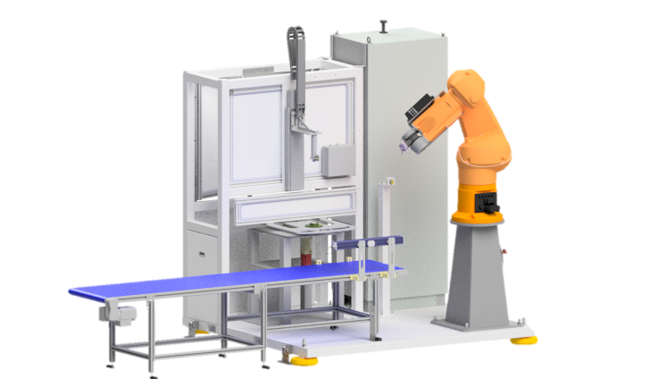
IFLEX Versa for Tubs
IFLEX Versa is configured for tub applications, giving manufacturers a dedicated in-mould labelling platform where broader flexibility and wider cell integration are required.
Stäubli TX2 Robot Arm
A six-axis Stäubli TX2 robot mounted on a steel pedestal matched to the moulding machine height, interfaced via Euromap 67. The robot handles both label placement and part extraction in one integrated cycle.
Label Station
Labels are loaded from outside the safety guarding through a dedicated access area, so the label cartridge can be refilled without stopping production.
Quick-Change EOAT
The aluminium EOAT connects via a Stäubli MPS quick-change coupler, disconnecting air, electrical and vacuum lines in seconds without tools.
Outfeed Conveyor
A belt conveyor with a static neutralising bar removes charge from moulded parts, while sensors confirm the deposit zone is clear before each new stack.
Control Cabinet
An EtherCAT based control system and operator command box provide Start, Stop, Home, Quality Check and robot status functions for practical production use.
Safety Guarding
A fully guarded cell built to Australian safety standards, with mesh fencing across the full robot envelope and a keyed interlocked access door.
Why Stäubli TX2 supports high-performance IML automation
The IFLEX platform is built on the Stäubli TX2 range, a proven six-axis robot platform for in-mould labelling applications where label placement accuracy, repeatable motion, and high-duty operation matter. Its compact, rigid arm structure supports fast movement paths without introducing instability at the point of placement.
At the core of the platform is Stäubli's approach to precision motion control and rigid mechanical design, helping the robot arrive cleanly at each position with minimal oscillation. For IML automation, that translates into better control over label presentation, extraction, and cycle consistency.
Comtec is Stäubli's representative in Australia, so IFLEX projects benefit from local engineering, commissioning, service, spare parts, and application support rather than relying on distant aftermarket support.
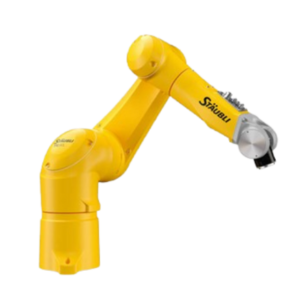
Stäubli robotics for IML
For buyers comparing IML automation platforms, robot choice affects cycle time, motion quality, hygiene suitability, long-term accuracy, and serviceability.

Why choose Stäubli industrial robots with Comtec in Australia
When a project depends on precise handling, reliable cycle times, hygienic design, or controlled-environment compatibility, robot choice matters. Comtec helps make that choice practical by combining Stäubli robot technology with local engineering, integration, and support.
Engineered for demanding environments
Stäubli robots are well suited to harsh industrial, cleanroom, washdown, and electrostatic-sensitive environments. Their sealed architecture and smooth surfaces help them operate where generic robot platforms may become a compromise.
Precision that supports production quality
High repeatability and rigid mechanical design make the platform well suited to precision handling, tight assembly work, fast-cycle packaging, and other quality-critical manufacturing tasks.
Local integration and support
Comtec helps scope, integrate, commission, and support Stäubli robots in Australian production environments, making projects easier to implement and easier to keep performing over time.
Built for flexible production
This section is designed to cover the buyer benefits often searched around IML systems: format flexibility, changeover speed, label handling reliability, and production adaptability.
-
✓
Format-specific solutions IFLEX Core is tailored for lid production, while IFLEX Versa is positioned for tub applications with broader flexibility requirements.
-
✓
Fast changeovers The Staubli MPS quick-change coupler allows the EOAT to be swapped in minutes, with no special tools and no reprogramming.
-
✓
Flexible production support The IFLEX platform can be configured to suit different product formats, tooling packages, and label handling requirements.
-
✓
No-stop label refill Labels are loaded from outside the guarding, so refilling does not interrupt production.
-
✓
Six-axis adaptability The TX2's six-axis reach adapts to different mould approaches rather than being locked to a single entry path.
-
✓
Australian project support Comtec can scope the solution, integrate the system, support commissioning, and help maintain long-term performance locally.
Local Australian support matters in IML automation
Competitor sites in this category often focus heavily on the machine and not enough on local delivery confidence. For Australian manufacturers, support matters just as much as the robot or label system itself. That includes application review, integration planning, safety, installation, commissioning, service, and future upgrades.
Comtec’s opportunity on this page is to win not only on product relevance, but also on being the practical local partner for in-mould labelling systems in Australia.
Project scoping
Reviewing product format, mould, cycle expectations, and integration requirements before configuration decisions are made.
Cell integration
Aligning robot, EOAT, label handling, control architecture, and downstream modules into one working automation system.
Service continuity
Supporting IFLEX installations with local technical response, Stäubli expertise, and ongoing operational support in Australia.
Expansion path
Adding inspection, packing, verification, and palletising modules as production needs grow or become more quality-critical.
Downstream automation options for complete IML cell performance
Buyers looking for an in-mould labelling system often also need inspection, packing, and end-of-line automation. Including these modules helps the page match commercial search intent beyond the robot itself.
Visual Inspection
Camera based inline quality inspection checks label presence, position and print quality automatically on every cycle, without additional handling.
RFID Tooling Verification
An automatic RFID check of the EOAT and label plate at every tool change, alarming before production begins if any item is mismatched.
Carton Erector
Automated erection and squaring of flat packed cartons, ready to receive product, removing manual box building from the line.
Bag-in-Box Liner Placement
Following carton erection, a liner bag is automatically placed inside the open carton before product loading, maintaining product integrity and reducing manual handling.
Product Packing
Automated placement of labelled lids or tubs from the outfeed conveyor directly into the prepared carton, with configurable stacking patterns and counts.
Box Sealing
Automated closing and sealing of filled cartons, with hot melt glue or tape sealing depending on carton specification.
Palletising
Robotic palletising of sealed cartons in a defined pattern, including pallet infeed conveyor and full pallet discharge, with configurable layer count and pattern per product.
Frequently asked questions about in-mould labelling systems
These FAQs are written to help answer-engine visibility as well as real buyer questions around IML, injection moulding automation, lids, tubs, and local support.
What is in-mould labelling?
In-mould labelling is a process where a label is placed into the mould before plastic injection, so the label becomes part of the finished product during moulding.
What is the benefit of IML for lids and tubs?
IML combines decoration and moulding in one process, helping improve presentation quality, reduce secondary labelling steps, and support fast production for lids and tubs.
What is the difference between IFLEX Core and IFLEX Versa?
IFLEX Core is the compact IFLEX solution for lid production, while IFLEX Versa is configured for tub applications that require broader flexibility and wider integration scope.
Can an IML system integrate with an existing injection moulding machine?
Yes. A properly engineered in-mould labelling system can be integrated with the injection moulding machine, mould, controls, EOAT, and downstream equipment as part of one automation cell.
What causes label placement problems in IML?
Common causes include unstable label pickup, poor vacuum handling, tooling mismatch, static control issues, inconsistent motion paths, or inadequate integration between robot and mould.
Why does end-of-arm tooling matter in in-mould labelling?
EOAT affects how reliably the robot picks, carries, positions, and releases the label, so it has a direct impact on label quality, cycle consistency, and changeover speed.
What robot platform is used in the IFLEX system?
The IFLEX platform uses Stäubli TX2 robotics, chosen for speed, rigidity, repeatability, and suitability for demanding automation environments.
Can Comtec support IML systems in Australia?
Yes. Comtec provides local engineering, integration, commissioning, and support for IFLEX and Stäubli-based automation projects in Australia.
Do buyers search for in mould labeling or in mould labelling?
Both spellings are used. In Australia, “in mould labelling” is the natural form, but many searches also use “in mold labeling”, so the page should reflect both variations naturally.
Talk to us about the right IML system for your application
If you are assessing in-mould labelling for lids or tubs, Comtec can help review your mould, product format, cycle targets, automation scope, and local support requirements before recommending the right IFLEX configuration.
1300 768 826
info@comtec.com.au
Mould type, lid or tub format, cycle expectations, cavity count, and whether you need downstream automation or inspection.
" * " indicates required fields