The question usually arrives late. Someone has a station that needs parts presented consistently, a quote for a bowl feeder that came back higher than expected, and a vague sense that "flexible feeding" is the modern answer. Modern is not the same as correct. The decision comes down to how many different parts pass through that station, and how often they change.
What a vibratory bowl feeder actually does
A vibratory bowl feeder is a machined track wrapped around a bowl, driven by resonant vibration. Parts climb the track, and a sequence of cut-outs, wipers, ledges and air jets rejects any part that is not in the one orientation the track is built to pass. What arrives at the end is a single continuous stream of correctly oriented parts.
It is worth being clear about how good this is when it fits. There is no camera, no robot and no software in the loop. A well-tooled bowl running the right part is fast, mechanically simple, and will run for years with almost no attention. The reason bowl feeders have not gone away is that for a single high-volume part they remain the cheapest reliable way to present it.
The constraint is in the same sentence: the tooling is cut for one part. A different part means different tooling, which means the bowl goes back to the toolmaker, or a second bowl gets bought, or somebody spends a shift trying to persuade the existing track to pass a part it was never shaped for.
What a flexible feeder does differently
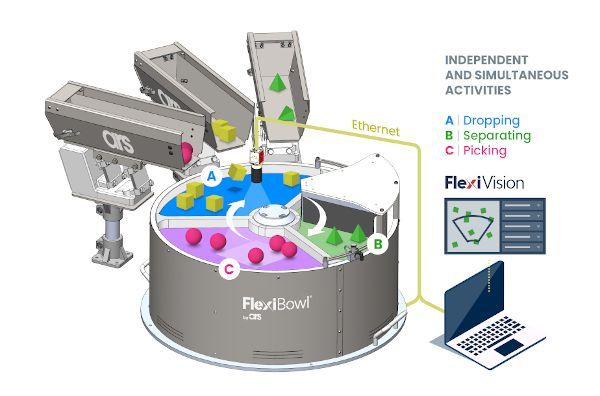
A flexible feeder removes the track entirely. Parts are dropped in bulk onto a flat disc. The disc moves — rotating, jogging and pulsing — to spread the parts out and flip them into new orientations. A camera looks at the disc, finds the parts that happen to be lying in a pickable orientation, and sends their coordinates to a robot, which picks them. Anything not pickable stays on the disc and gets moved again.
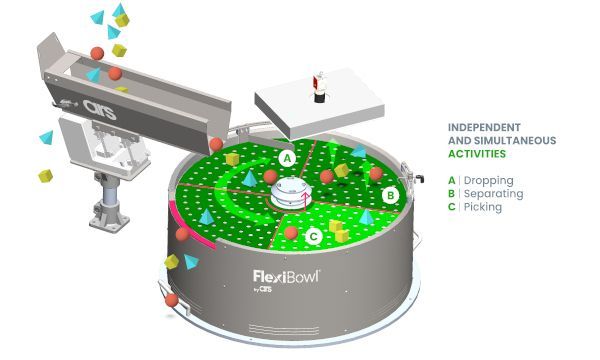
The orientation logic that a bowl solves in hardened steel is solved here in software and vision. Change the part and you change a recipe: motion parameters for the disc, a new part template for the camera, a new grip point for the robot. Nothing is machined, and nothing is thrown away.
That is the whole trade. A bowl feeder converts engineering effort into permanent tooling. A flexible feeder converts it into changeable software. Which one is better depends entirely on whether your production wants permanence or change.
The five questions that decide it
1. How many different parts go through this station?
One part, forever: a bowl feeder. Three or more parts, or a part family that keeps growing: a flexible feeder, and the argument gets stronger with every additional part number. The crossover in practice usually sits around the third or fourth bowl you would have to buy for the same station.
2. How often does the product change?
This matters more than the part count. A station running four parts that change twice a year is a different problem from a station running four parts that change twice a shift. A software recipe change takes seconds; a disc surface swap takes five to ten minutes. Retooling a bowl takes considerably longer than either, and it takes it from someone who has other work on.
3. What rate does the station actually need?
Be honest about this one, because it is where flexible feeding is most often oversold. ARS publish a typical achieved feed rate of 20 to 50 parts per minute for a FlexiBowl®, depending on part geometry, how the parts present on the disc, and the robot's cycle time. A well-tooled vibratory bowl running one part can beat that.
So if you need raw parts-per-minute on a single part that will never change, the bowl wins on rate and you should buy the bowl. The flexible feeder wins on the hours you are not losing to changeovers — which on a high-mix line is usually the larger number, but it is a different number, and it is worth actually calculating rather than assuming.
4. Will the part tangle, nest, stick or mark?
Springs that hook into each other. O-rings that stack and cling. Silicone seals that grab any surface they touch. Thin stampings that shingle. Polished or coated parts where a scuffed face is a reject.
These are the classic bowl-feeder failure modes, and they are the flexible feeder's clearest advantage. A flat disc with programmable impulses separates parts that a vibrating track would knit together, and the absence of continuous vibration means surface-critical parts are not being abraded on their way to the robot.
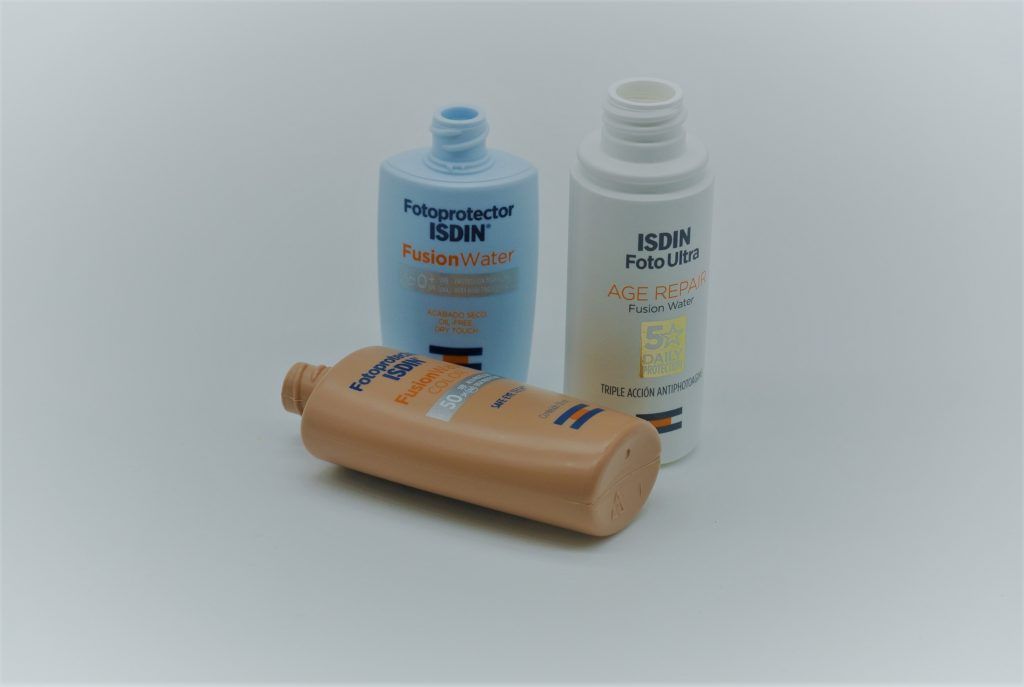
It still has to be tested. Some geometries separate immediately and some refuse to, and no datasheet will tell you which yours is.
5. What happens to the tooling when the product is discontinued?
This is the question nobody asks at quotation time and everybody asks eighteen months later. Bowl tooling is an asset with exactly one use. When the part is superseded, the tooling is scrap and the next part starts the spend again.
A flexible feeder is reusable capital. The next product needs a new recipe, not a new machine. On a product range that turns over, that changes the shape of the investment considerably — the feeder outlives the part it was bought for.
Side by side
| Consideration | Vibratory bowl feeder | Flexible feeder |
|---|---|---|
| Single part, high volume, no change | Better — cheaper and faster | Works, but you are paying for flexibility you will not use |
| Three or more parts on one station | A bowl each, or retooling between runs | Better — one machine, recipes per part |
| Changeover time | Hours to days, and it needs a person who knows the tooling | Seconds for a recipe; 5–10 minutes if the disc surface changes |
| Typical feed rate | Higher on a single tooled part | 20–50 parts/min, application dependent |
| Tangling, nesting or sticky parts | Common failure point | Usually handled — but test it |
| Delicate or surface-critical parts | Continuous vibration can mark or wear the part | No vibration on the part |
| What it needs around it | Little — often just the track and a stop | A camera and a robot, which is real added cost |
| Noise | High | Low |
| Cleanroom work | Difficult | ISO Class 5 configurations available |
| When the product is discontinued | Tooling is scrap | Machine is reused with a new recipe |
Where the cost actually sits
A flexible feeder costs more than one bowl feeder. Anyone telling you otherwise is comparing the wrong things.
The comparison that is worth doing is across the whole product family and the whole life of the station. Count every bowl you would need, plus the retooling on each product change, plus the downtime while it happens, plus the tooling that becomes scrap when a part is superseded. Then add the camera and the robot to the flexible feeder side, because they are genuinely part of the cost and are sometimes the reason the answer comes back "buy the bowl".
Two things tend to swing the result:
- Whether a robot is already in the plan. If the station needs a robot regardless, the marginal cost of flexible feeding is much smaller than it first appears.
- How much of your product range shares the station. One feeder covering a family of twelve part numbers is a different proposition from one covering two.
When a vibratory bowl is still the right answer
Since we sell flexible feeders, this section is the one worth reading.
Buy the bowl when the part is stable, the volume is high, the geometry is friendly, and the station will not be asked to do anything else. A simple moulded cap running at rate on a dedicated line for the next five years does not need vision, a robot, or a recipe system. It needs a bowl, and it will run more cheaply and with fewer things to go wrong.
Buy the bowl also when there is no robot in the picture and no appetite to introduce one. A flexible feeder without a robot to pick from it is not a feeding solution — it is a disc with parts on it.
The short version
If the part never changes, tool for it. If the part changes — or there are several parts, or they tangle, stick or mark — stop buying tooling and start buying software. The cost of being wrong is highest in the direction of over-tooling, because tooling cannot be undone.
How to settle it without guessing
Every claim above has a caveat attached, and they all resolve the same way: run the parts.
Geometry, surface finish and how parts nest in bulk decide whether a flexible feeder works on your application, and none of the three can be read off a drawing. We keep a demonstration system in Melbourne for exactly this reason.
- Send 50 to 200 representative parts — including the marginal ones, not just the good ones.
- We run them and send back video plus a written assessment: recommended model, disc surface, lighting and an estimated rate.
- If flexible feeding is the wrong answer for your part, we will say so. That result is worth more to you than a system that never quite settles.
Full specifications, the model range from FB 200 to FB 1200 and the three operating modes are on our FlexiBowl® flexible feeding page. If the cell also needs the arm and the camera, we supply Stäubli industrial robots and SensoPart machine vision from the same engineering team.