



FlexiBowl flexible feeding FAQ for Australian manufacturers
Answers to the most common questions about FlexiBowl flexible feeders, vision-guided feeding and robotic part presentation. Built for high mix, small batch production in Melbourne, Victoria and across Australia.
Can FlexiBowl replace a traditional vibratory bowl feeder?
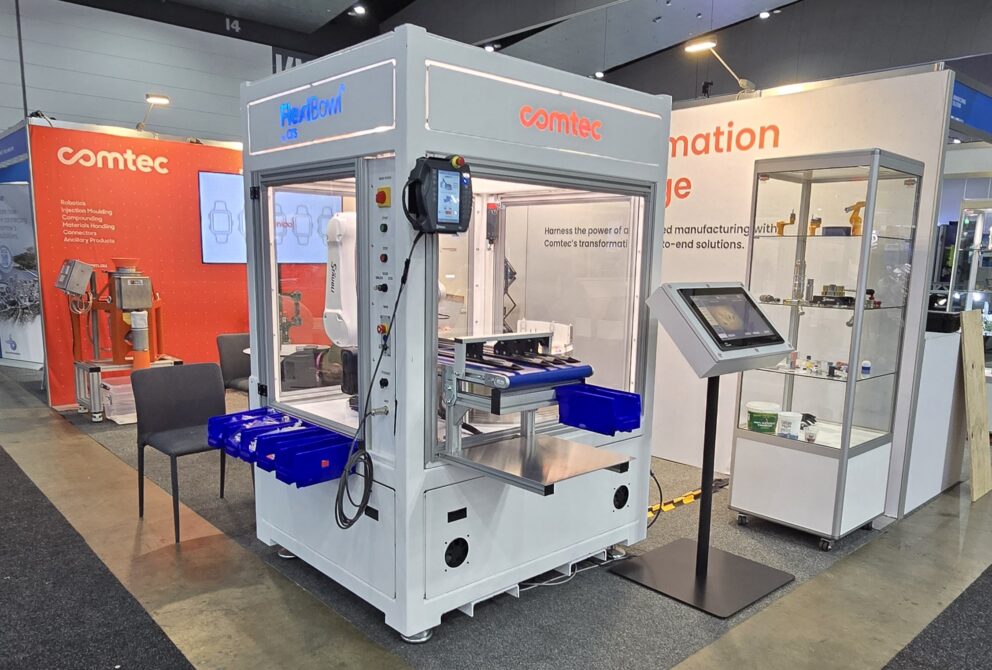
Yes. FlexiBowl can replace multiple vibratory bowl feeders with one configurable flexible feeding system, reducing tooling, changeover time and SKU complexity for high mix manufacturing.
Is FlexiBowl suitable for small batch or high mix production?
Yes. FlexiBowl is designed for high variability and many SKUs, especially in contract manufacturing, medical devices, dental components, packaging and general engineering.
Can FlexiBowl feed parts to multiple robots?
Yes. Multi-robot layouts are supported depending on part presentation, cycle time and buffer strategy. This is common in dual-station assembly, inspection plus packing, or parallel machine tending.
Do I need a vision system with FlexiBowl?
In most applications, yes. Vision enables reliable orientation detection and pick coordinates. Common use cases include vision inspection of dental implants, medical components, caps and closures, and machined parts prior to assembly.
Does FlexiBowl work in cleanrooms or medical environments?
Yes. FlexiBowl is used by Australian medical manufacturers for feeding and presenting parts in controlled environments, including surgical components and precision plastic items with vision-guided handling.
Is changeover manual or automatic?
Most changeovers are recipe driven. You can switch between products quickly without mechanical retooling, which is ideal for high mix, low volume production.
Which FlexiBowl model suits my parts, 350, 500 or 650?
Model selection depends on part size, weight, geometry, surface condition and target throughput. Typical sizing maps to small parts on FlexiBowl 350, medium on FlexiBowl 500, and larger parts on FlexiBowl 650, but testing is the right way to confirm.
What parts work well with flexible feeding?
Great candidates include plastic caps and closures, medical device components, dental parts, moulded housings, small machined components, connectors, and many stamped parts. Parts that tangle or nest may need specific bowl patterns or a different strategy.
Can FlexiBowl support CNC machine tending?
Yes, especially for small parts where flexible presentation helps with consistent pickup. It is often paired with robots for loading and unloading, with vision inspection for orientation, presence checks, or basic quality screening.
What is the typical project process in Australia?
Most projects start with a quick feasibility review, then a part trial to confirm orientation stability, vision performance and throughput. After that, we define the cell scope, integration, safety, commissioning and training.
Do you provide local support in Melbourne and Victoria?
Yes. Comtec supports FlexiBowl projects across Melbourne, Victoria and Australia, including integration support, commissioning, optimisation and training.
Search intent terms covered here include: FlexiBowl flexible feeder, flexible feeding system, vibratory bowl feeder replacement, vision-guided feeding, robotic part feeding, dental implant vision inspection, medical device automation, and high mix manufacturing in Australia.