 Authorised Australian distributor · ARS Automation, Italy
Flexible parts feeding, proven on your parts before you buy
We run your actual components on a FlexiBowl at our Melbourne demonstration facility, try the disc surfaces and motion recipes that suit them, and send you the footage plus a written recommendation on model and options. No cost and no obligation.
Most enquiries are answered the same business day by an application engineer, not a salesperson.
FlexiBowl is designed and manufactured by ARS Automation, Italy, a specialist in flexible feeding since 1987
Flexible feeding earns its money in three situations
If none of these describe your line, a well tooled vibratory bowl is probably the cheaper answer and we will tell you so.
You feed more than one part number
Every part number in a vibratory system needs its own tooled track. Two parts means two bowls. Ten parts means ten bowls, ten sets of tooling and somewhere to store them. With flexible feeding the part change is a saved software recipe on the same machine.
Your parts jam, tangle or get damaged
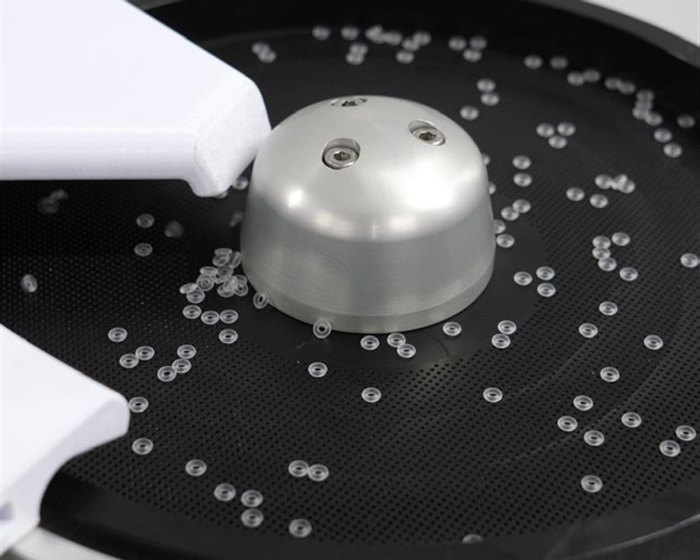
O-rings, silicone seals, springs, soft mouldings and finished surfaces are the parts that cause the most trouble in a vibrating track. FlexiBowl does not vibrate. Parts are separated by disc motion and short impulses, so tangling and cosmetic damage largely stop being the daily problem.
Changeover is eating your shift
If a product change means swapping a bowl, re-tuning a track and losing an hour, that hour comes out of production every single time. A recipe change takes seconds. If the disc surface also has to change, allow five to ten minutes.
Recognise two or more of these? The feasibility test below is the fastest way to find out whether it works on your specific parts.
We will feed your parts before you spend anything
Nobody should buy a feeder on a brochure claim. Whether flexible feeding suits your part is a test, not a specification.
Tell us about the part
Two minutes on the form below. Size, weight, material, how you feed it now and how many part numbers you are dealing with. A photo helps more than a paragraph.
Send us 50 to 200 samples
Post them to our Keysborough facility, or hand them over at a site visit. We need enough to run a realistic bulk feed, not one or two show pieces.
We run them on the demonstration machine
An application engineer works through disc surfaces, motion recipes and, where relevant, backlight and vision settings, until the parts present reliably for a robot pick.
You get the results in writing
Video of your parts running, the model and options we would specify, and the parts back. From there you decide whether it is worth quoting.
What you receive
At no charge, whether or not you go ahead.
- Video footage of your own components being separated, oriented and presented
- A written recommendation on model, disc surface and options
- A realistic feed rate for your part rather than a catalogue figure
- An assessment of whether vision is needed and what it would need to see
- Your sample parts returned
Book a feasibility test on your parts
Fill this in and an application engineer will come back to you, usually the same business day, with where to send the samples and anything else we need to know first.
Useful to have ready
- What the part is, and roughly how big and heavy
- Material and surface finish, especially if it is soft, sticky or reflective
- How you feed it today, and what goes wrong
- How many different part numbers need feeding
- Target parts per minute, if you have one
- Robot brand, if the cell already exists (optional)
- A photo or drawing of the part (optional, but it speeds everything up)
Feasibility test request
No cost, no obligation, and your parts come back.
"*" indicates required fields
How FlexiBowl® works
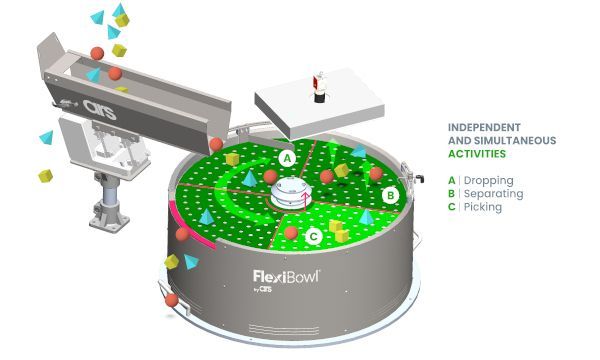
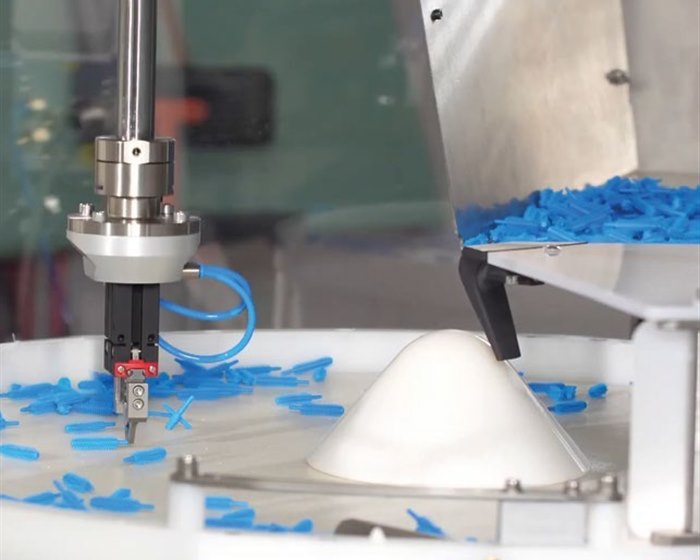
No vibration and no dedicated tooling. A servo driven disc, an impulse generator and machine vision separate, orient and present parts for a robot to pick.
Bulk parts loaded into the hopper
A vibratory or conveyor bulk hopper (1.5 to 60 litre options) delivers a controlled flow onto the disc.
The servo disc spreads and separates
Bidirectional rotation with programmable speed and acceleration distributes the parts, breaking up clusters and stacks.
Impulses flip and reorient
Short sharp impulses lift parts briefly off the surface so they land in new orientations. Parameters are stored per part recipe, with no mechanical adjustment.
Vision locates every part
ARS FlexiVision One, a plug-and-play vision system with a no-code interface, or any third party vision system, reads position and orientation in real time, including reflective, dark and transparent parts. More on FlexiVision One
The robot picks
Coordinates go to the robot over Ethernet TCP/IP, EtherNet/IP or digital I/O. The feed sequence takes about 0.5 seconds, with dropping, separating and picking happening at the same time. Typical achieved rates are 20 to 50 parts per minute depending on geometry and robot cycle time.

FlexiVision One: faster setup, fewer errors, same power
FlexiVision One is ARS's own vision system for FlexiBowl. It is a general-purpose, plug-and-play system with a no-code interface. ARS state that a feeding application can go from setup to a working vision model in as little as five minutes.
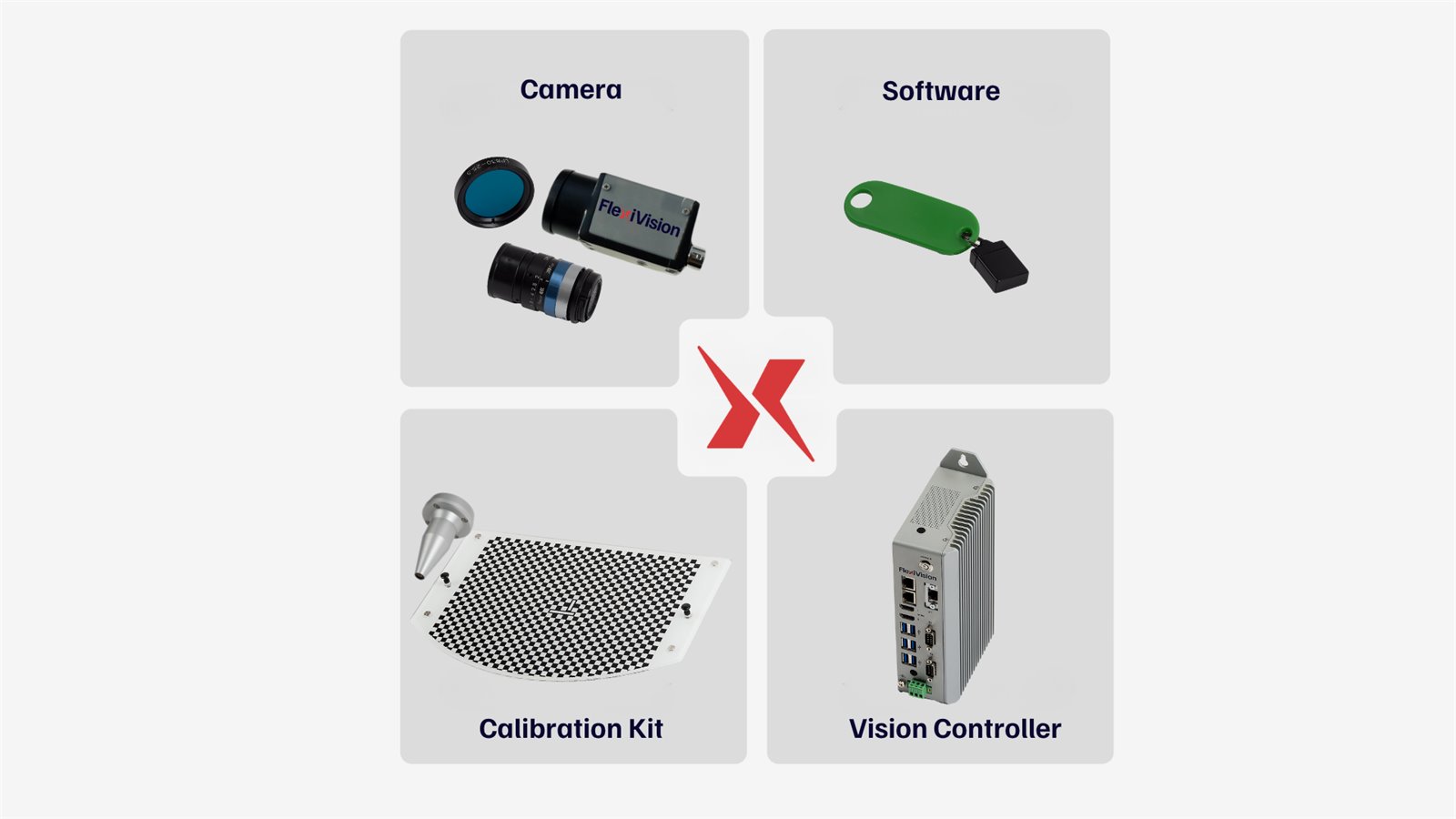
- Plug and play. A general-purpose vision system with a no-code interface, built to cut commissioning time and setup errors.
- One place to run the feeder. Motion and parameter control of the feeding system, bowl filling and hopper feed, with an integrated recipe manager.
- Automatic part-guided tuning. Built-in tools for flexible feeding help find the best setup for each part.
- Safety built in. Safety Torque Off is integrated, with PLe (category 4) and SIL 3 compliance stated by ARS, and no external safety relays required.
- Connects directly. A web-based interface with direct connectivity to robots and PLCs, without external gateways or custom scripts.
Source: ARS Automation FlexiBowl brochure, current generation. Ask us whether FlexiVision One suits your application.
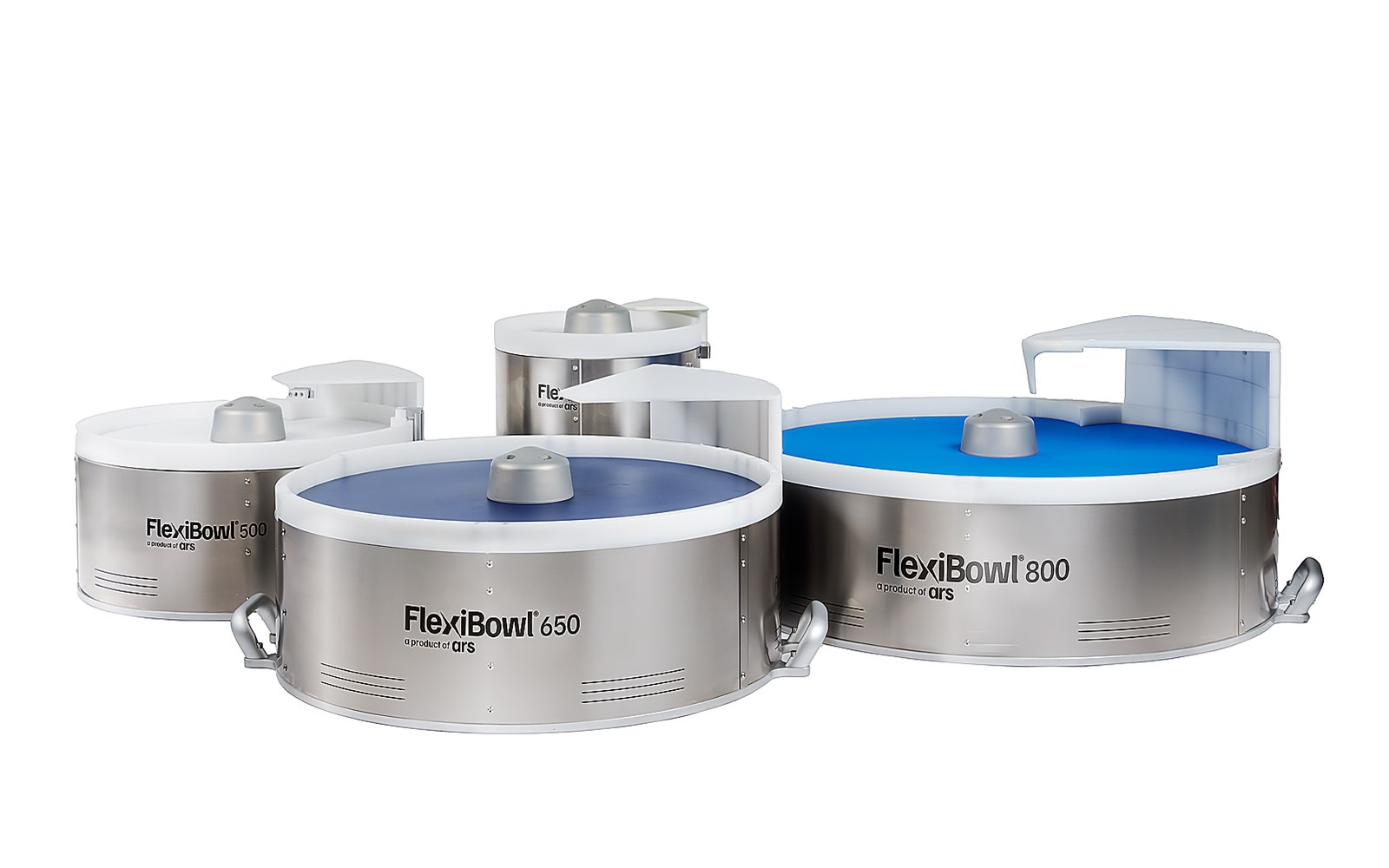
Six models. Start from your part size.
Disc diameter from 200 mm to 1200 mm. If your part sits near a boundary, the feasibility test settles it, because part shape matters as much as part size.
| Model | Part size | Max part weight | Feeding surface | Footprint | Hopper | Multi-part | Cleanroom |
|---|---|---|---|---|---|---|---|
| FlexiBowl® 200e Micro screws, pins, electronic components, tiny mouldings and seals under 10 mm. Datasheet (PDF) | 1–10 mm | < 20 g | 90 cm² | 235 × 218 mm | 1.5 L | – | ✓ |
| FlexiBowl® 350e O-rings 10 to 20 mm, small clips, caps, fasteners, medical device components. Datasheet (PDF) | 1–20 mm | < 40 g | 166 cm² | 447 mm | 5 / 10 L | – | ✓ |
| FlexiBowl® 500 Caps, closures, connectors, moulded housings, springs and clips. The most requested model. The 500E variant feeds down to 1 mm. Datasheet (PDF) · 500E datasheet (PDF) | 5–50 mm | < 100 g | 475 cm² | 629 mm | 10 / 20 L | ✓ | ISO 5 |
| FlexiBowl® 650 Automotive clips, larger medical housings, O-rings 50 to 100 mm, packaging inserts. Datasheet (PDF) | 10–110 mm | < 170 g | 922 cm² | 778 mm | 20 / 40 L | ✓ | ISO 5 |
| FlexiBowl® 800 Large mouldings, automotive body components, packaging containers up to 250 mm. Datasheet (PDF) | 20–250 mm | < 250 g | 1,125 cm² | 941 mm | 20 / 40 L | ✓ | ISO 5 |
| FlexiBowl® 1200 The largest feeding surface ARS produce. Oversized assemblies and packaging components. Project specific assessment. Datasheet (PDF) | 50–300 mm | < 300 g | 4,120 cm² | 1,346 mm | 40 / 60 L | – | ISO 5 |
Max surface payload is 1 kg on the FB 200e, 3 kg on the FB 350e and 7 kg on the FB 500 and above. Pick height is 172 mm on the FB 200e and 270 mm on every other model. Multi-part feeding divides the disc into sectors so up to six component types can be fed from one unit, each from its own bulk hopper. It is offered on the FB 500, 650 and 800, and ARS assess these applications case by case, so it is scoped before it is quoted.
Downloads: FlexiBowl product brochure, current generation (PDF, 4 MB). The datasheet for each model is linked in the table above.
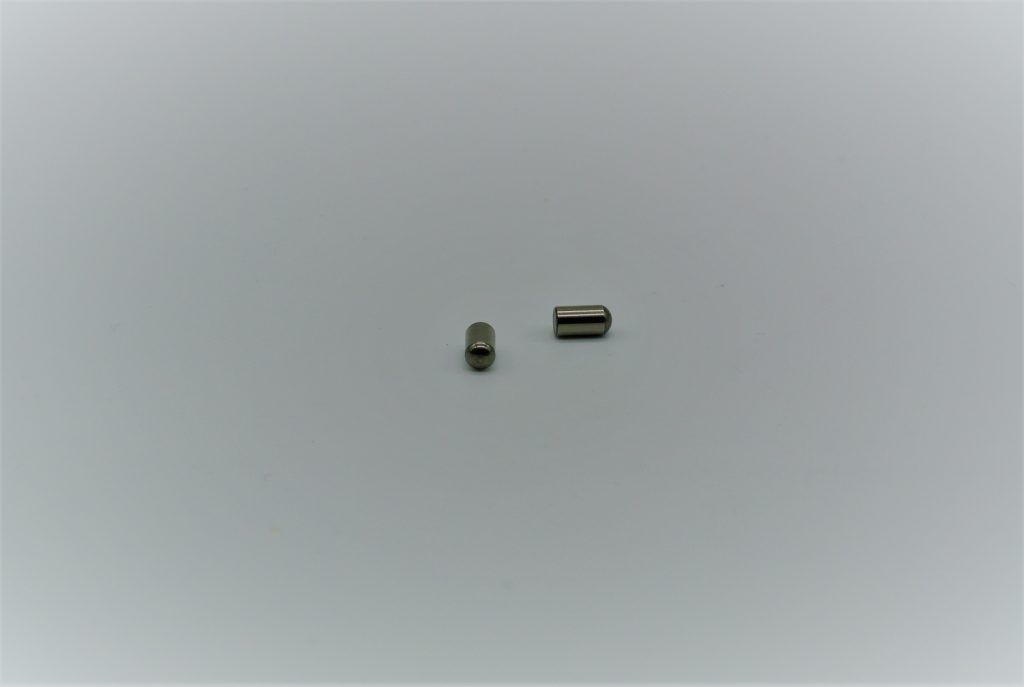
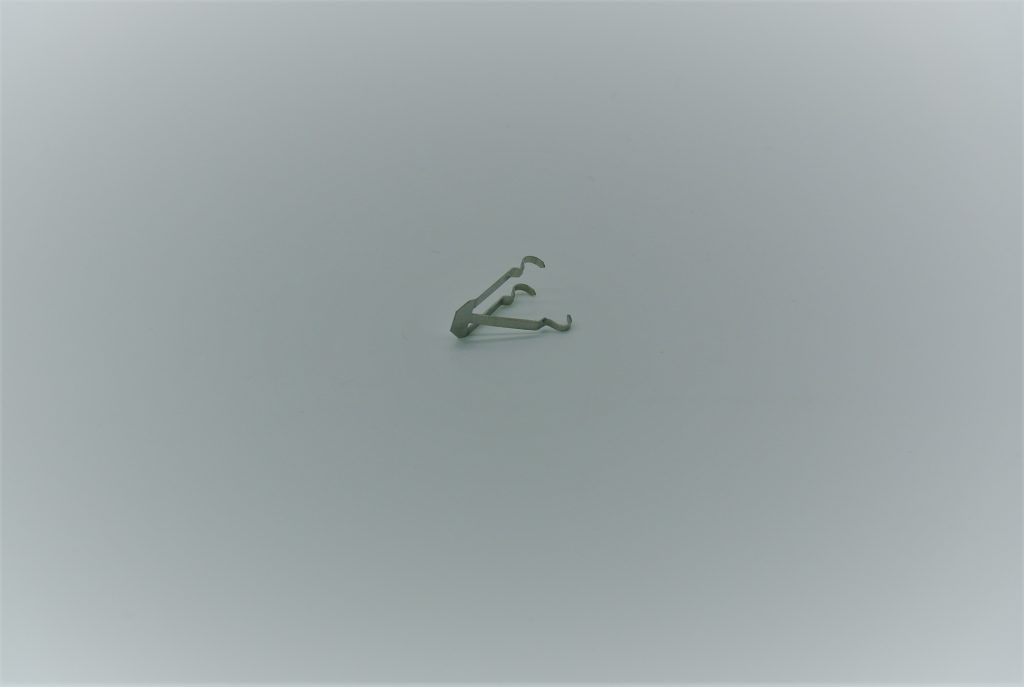
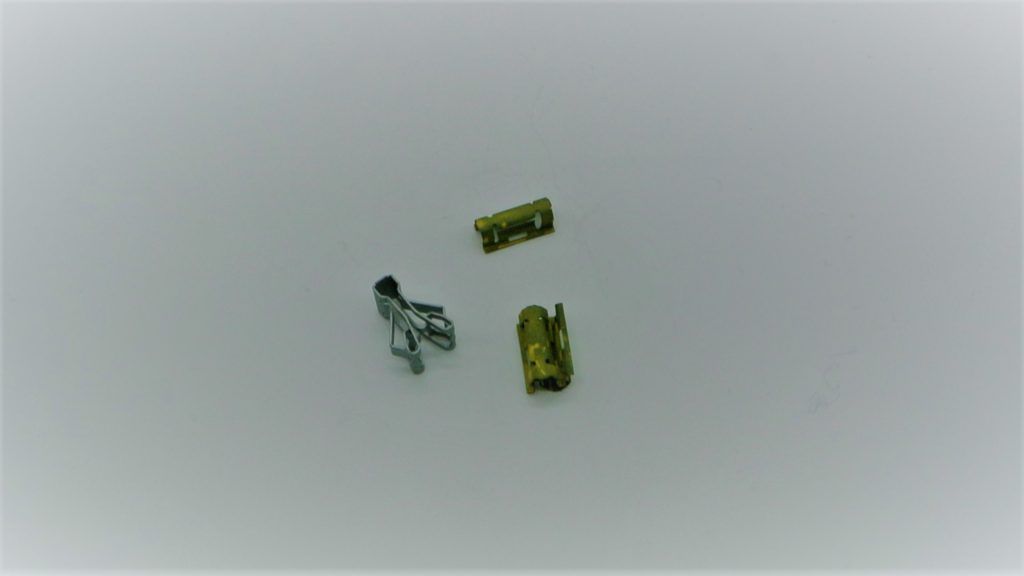
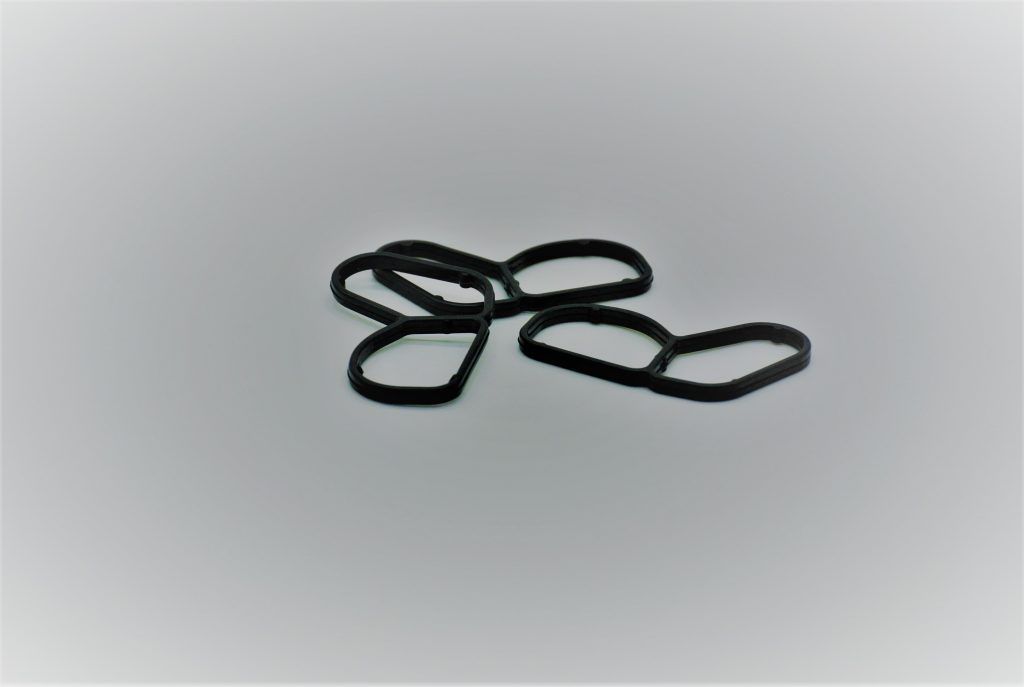
Real components, not renderings
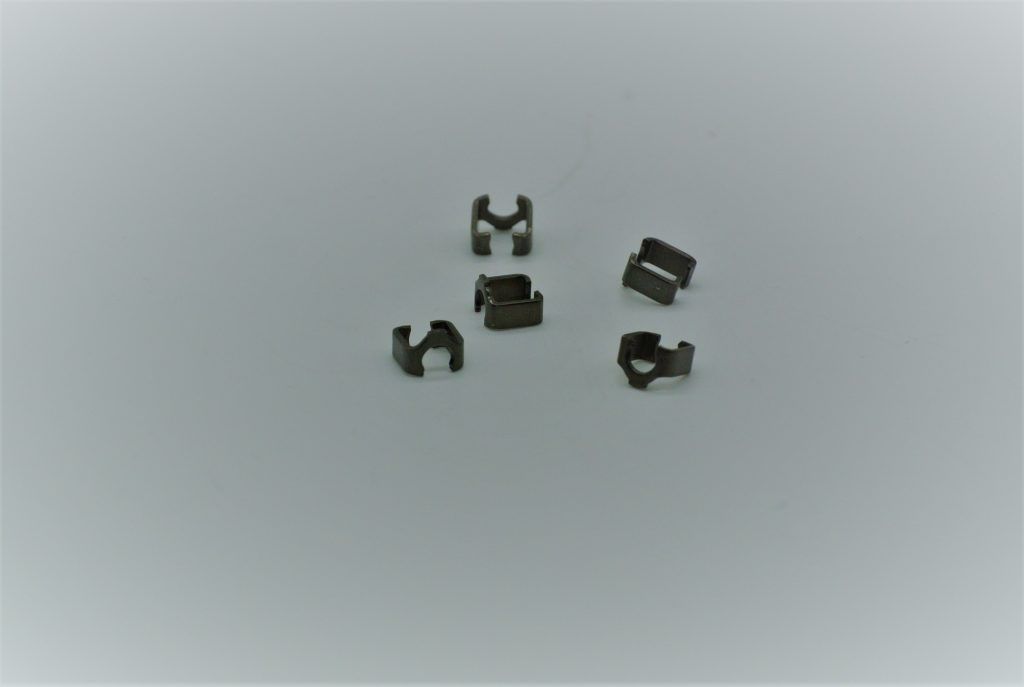
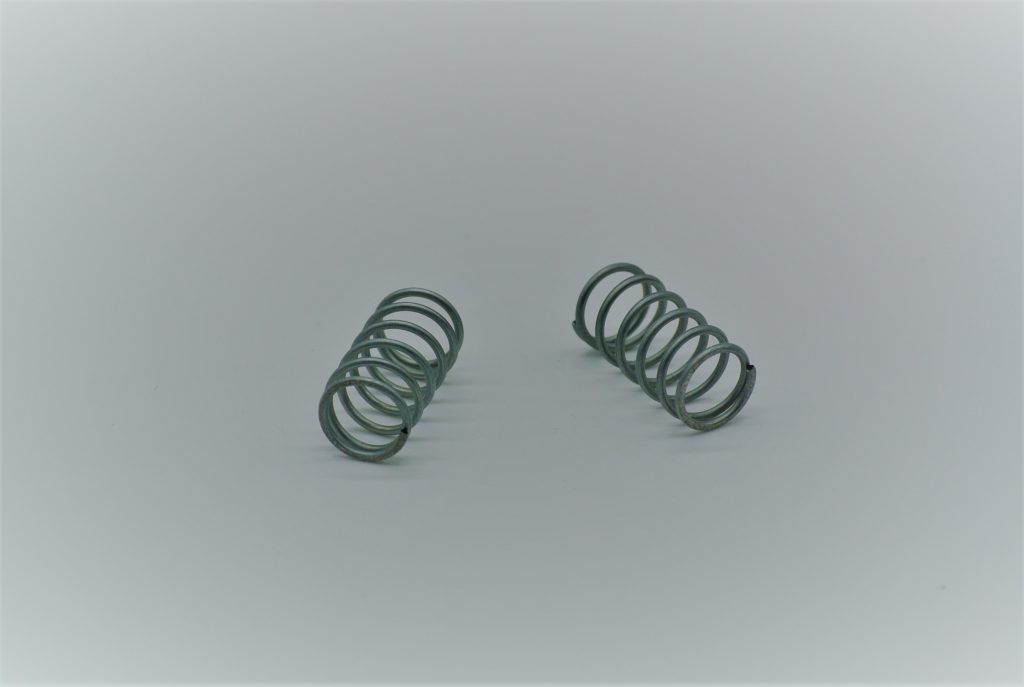
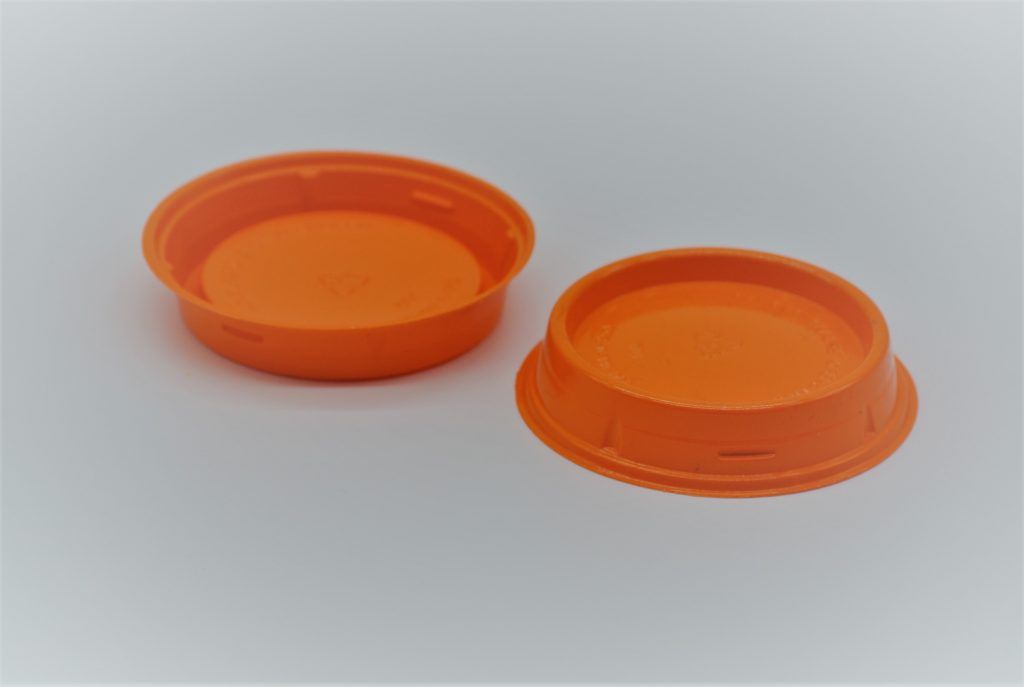
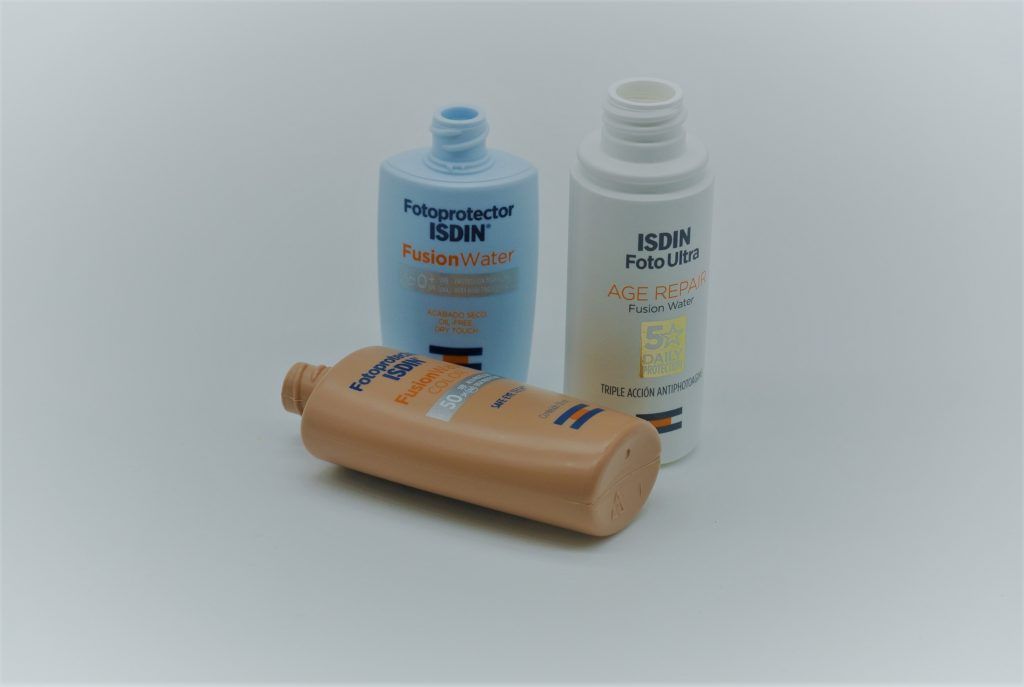
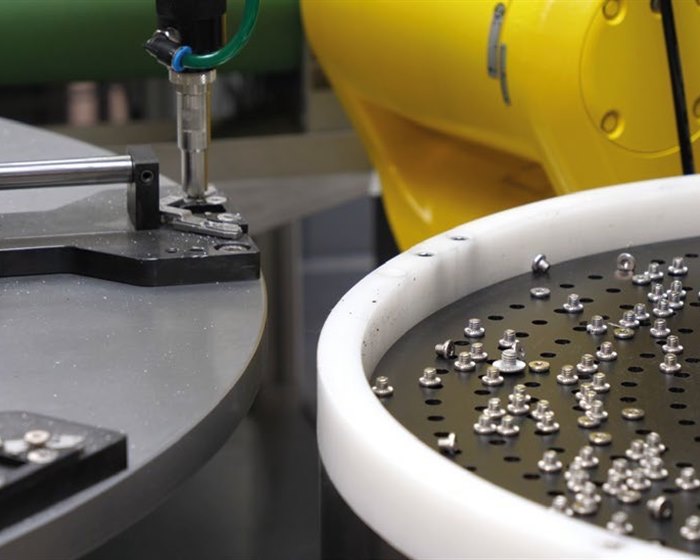
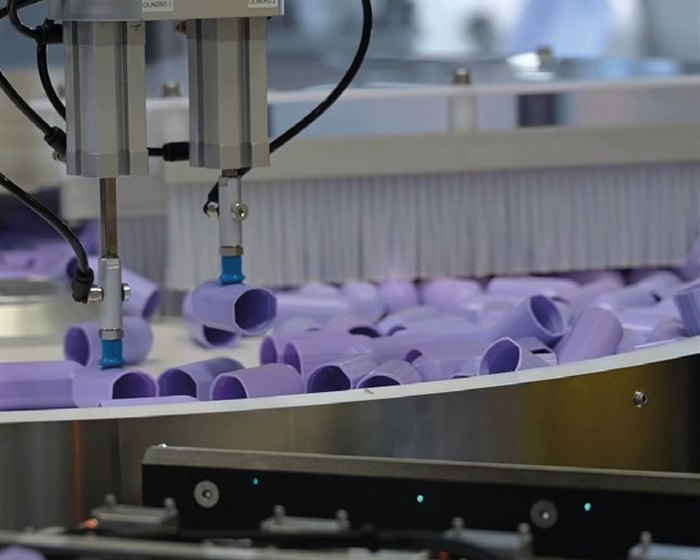
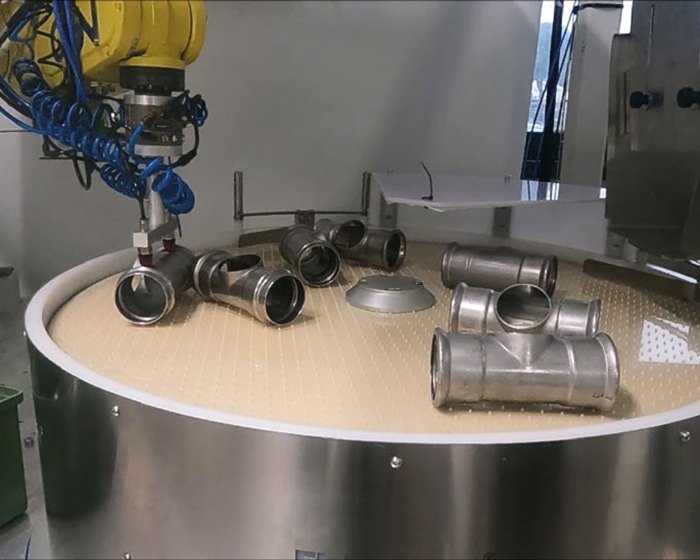
A cross section of the part types running on FlexiBowl machines. If yours looks nothing like these, that is exactly the case worth testing.
Built for the parts that break other feeders
Vibratory bowl or flexible feeder?
Both are the right answer somewhere. The difference is what happens when the part changes.
| Vibratory bowl feeder | FlexiBowl® | |
|---|---|---|
| Tooling per part number | Custom track for every part | None |
| New part introduction | New bowl, weeks to months | New software recipe |
| Changeover time | Swap and re-tune, typically an hour or more | Seconds by recipe, 5 to 10 min if the disc changes |
| Delicate or sticky parts | Vibration risks damage and tangling | No vibration, disc surface chosen to suit |
| Peak rate on one fixed part | Usually higher | 20 to 50 parts/min typical |
| Upfront hardware cost | Lower for a single part | Higher, but not repeated per part |
| Cost of the tenth part number | Tenth bowl and tenth set of tooling | Same machine, another recipe |
| Vision required | No | Yes, and it is part of the system |
| Cleanroom and quiet operation | Difficult | ISO Class 5 option on FB 500, 650, 800 |
| Reuse when the product changes | Tooling is scrap | Machine carries over |
We are the distributor for one side of this table, so read it with that in mind. The long version, including the cases where a vibratory bowl is clearly the better buy, is here: Vibratory bowl feeder vs flexible feeder.
How the business case actually gets built
We will not put a payback figure on a web page, because it depends entirely on four numbers that are specific to your line. These are the ones we work through with you.
1. How many part numbers you feed
This is the number that decides it. Vibratory cost scales with part count because each one needs its own tooled bowl. Flexible feeding cost does not. Somewhere between two and five part numbers the lines usually cross, and where exactly depends on your tooling prices.
2. What a tooled bowl actually costs you
Not just the purchase. Design and proving time, the lead time before production can start, the floor space for bowls not currently running, and the write-off when a part is revised.
3. Minutes lost to changeover
Changeover minutes per event, multiplied by events per week, multiplied by the value of an hour on that line. This is usually the number that surprises people once it is written down.
4. What misfeeds and damage cost
Rejects, rework, and the operator standing at the machine clearing jams. If someone is babysitting a feeder, that labour belongs in the comparison too.
When we will tell you not to buy one
If you feed one part, at high volume, and that part is not going to change for years, a well tooled vibratory bowl will very likely beat a FlexiBowl on both capital cost and raw rate. That is a real case and it comes up. Flexible feeding earns its money on variety, on difficult parts and on changeover, not on feeding one screw faster. We wrote that argument out in full here.
It works with the robot you already have
Licence-free plug-ins for every major industrial robot and cobot brand. FlexiBowl is not tied to a robot supplier, and neither is the recommendation you get from us.
Comtec also supplies Stäubli robots, SensoPart vision and quick tool changers, so the whole cell can come from one set of engineers if that suits you. If you would rather not specify a cell from parts at all, there is a pre-engineered one.

A feeder on its own does not assemble anything
A FlexiBowl presents parts. Something still has to see them, pick them and do the work. That normally means specifying a robot, a vision system, guarding, tooling and the integration between all of it, which is where most feeding projects stall.
BFLEX is that cell, already engineered. A compact, pre-configured automation cell built around vision guided flexible feeding, for high mix assembly, inspection and machine tending. You are specifying one system rather than negotiating between three suppliers.
- Press fit and force controlled operations
- Screwdriving and fastening with torque control
- Snap fit assembly of flexible plastic parts
- Adhesive and sealant application, including micro dosing
- Product kitting and packaging
- Verification, inspection and traceability
Because the feeding is recipe driven, one cell can run several product families with no mechanical retooling for most changeovers. It is in use across medical devices, cosmetics, automotive, electrical, plastics and metal manufacturing.
See the BFLEX cell → See applications by industry →Options that get specified during the test
These are chosen against your parts, not ticked off a list. The feasibility test is where most of them get decided.
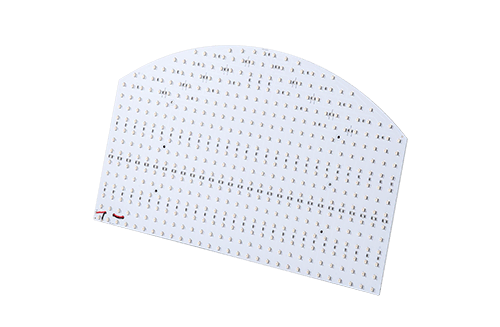
Backlight
Silhouettes the part for vision. The usual answer for dark or reflective components.
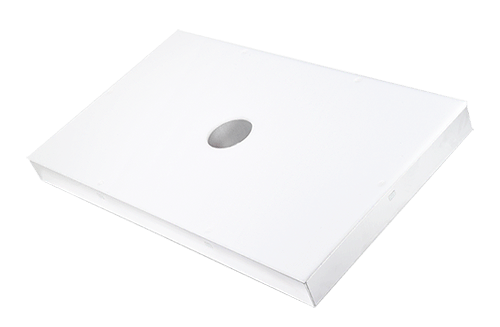
Toplight
Even top illumination where surface features have to be read, not just the outline.
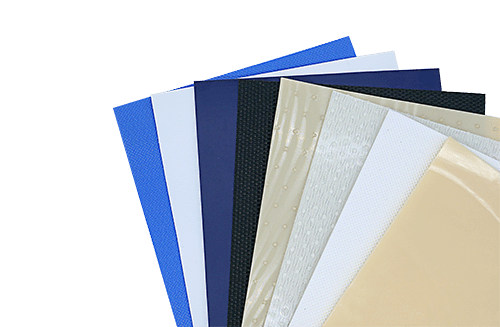
Disc surfaces
Colours and textures. Rough surfaces give the grip needed to separate sticky rubber and silicone.
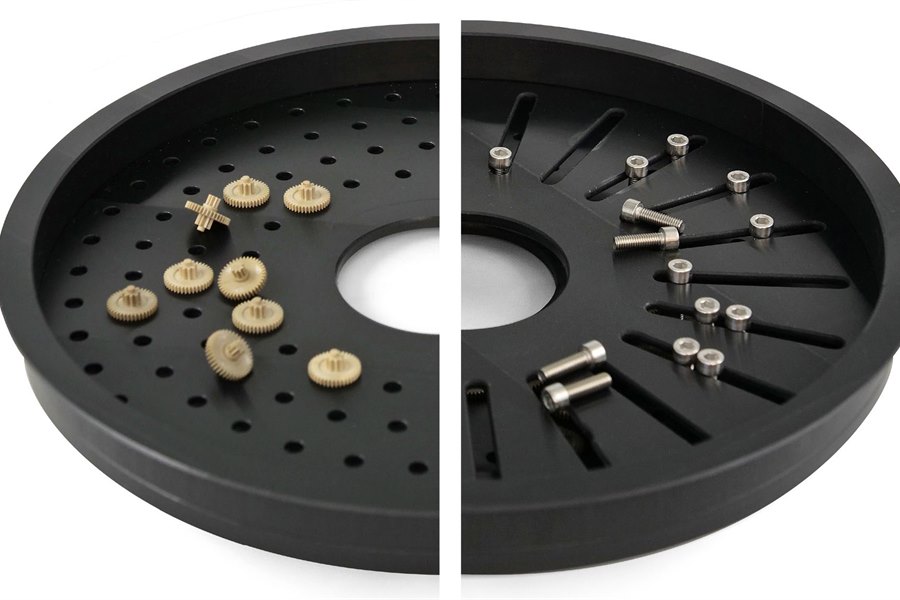
Grooved discs
Custom profiles that encourage long or cylindrical parts to settle in a usable orientation.
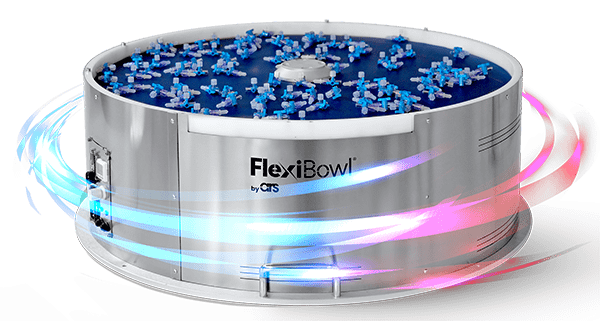
FlexiTrack
Continuous motion picking. Greater productivity and more stable cycle times in the same footprint.
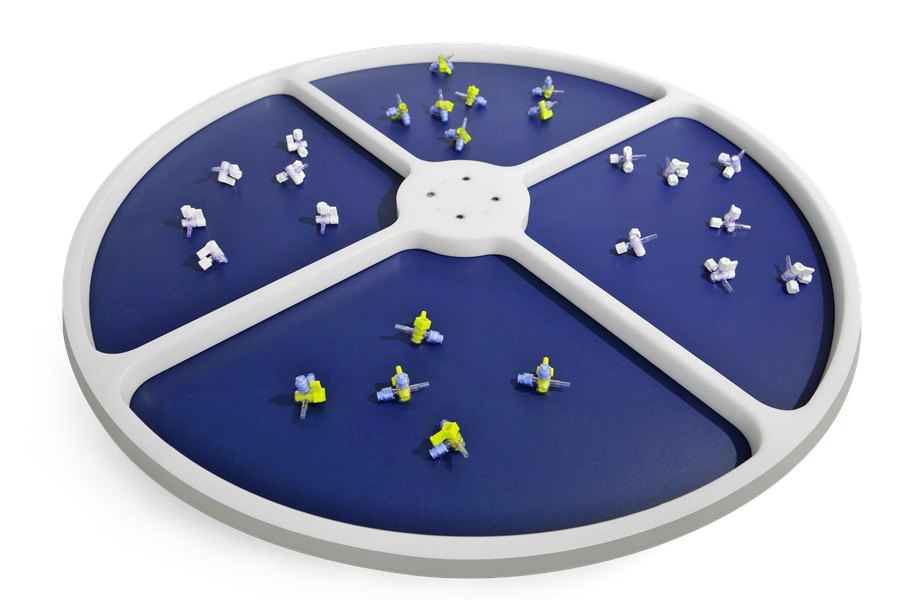
Multi-part feeding
Up to six component types from one sectored disc. FB 500, 650 and 800, assessed case by case.
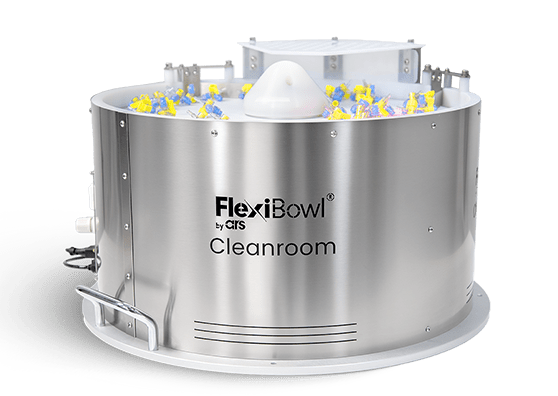
Cleanroom bundle
ISO Class 5 package with antistatic disc surfaces and stainless contact parts.
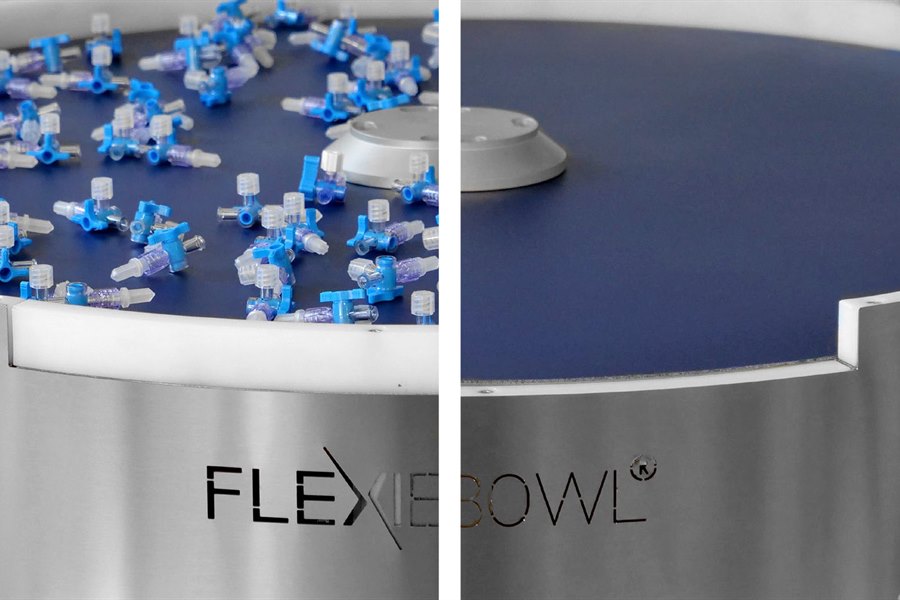
Quick emptying
Clears the disc between product runs without stripping the machine down.
ARS build it. We make it work on your floor.
You can buy a flexible feeder from a lot of places. What is harder to find in Australia is the machine sitting locally, the engineer who has run your part on it, and someone in the same time zone when it stops at 6am.
A machine you can stand in front of
The Melbourne demonstration system runs your parts before you commit to anything.
Application engineering, not order taking
Disc surface, motion recipe, vision and robot interface scoped as one system.
Import, install and commission
Logistics, configuration, on-site installation and operator training.
Spares held locally
Australian stock and remote support, rather than a support ticket into a European time zone.
Talk to someone who has run the machine
Melbourne · demonstration facility
Factory 4, 2 Indian Drive, Keysborough VIC 3173
Sydney
Suite 20, 20–28 Maddox Street, Alexandria NSW 2015
Also serving
Adelaide, Brisbane and Perth
Direct
1300 768 826 · info@comtec.com.au

Made by ARS Automation, who invented the category
FlexiBowl is patented and manufactured by ARS S.r.l. of Arezzo, Italy. ARS Automation was founded in 2002, building on 15 years of prior robotics expertise, and patented FlexiBowl in 2011 as the first vision guided flexible parts feeder of its kind.
Comtec is ARS Automation's authorised distributor for Australia, covering sales, application engineering, commissioning and ongoing technical support from Melbourne, Sydney and Adelaide.
ARS report more than 35 years in flexible automation, 2,000+ installations worldwide and 80+ distributors and partners in more than 40 countries. ARS Automation has also been chosen by SCHUNK as the sole provider of feeding solutions for its CoLabs (ARS Automation FlexiBowl brochure).
What engineers ask us first
A vibratory bowl feeder uses resonant vibration through a custom tooled track to orient one specific part, which means dedicated tooling for every part number. FlexiBowl uses a servo driven disc and an impulse generator: no vibration, no dedicated tooling, and changeovers in minutes through software. One FlexiBowl can replace a family of vibratory bowls across a product range.
Model selection comes down to part size, part weight, required feed rate and environment. The range spans 1 to 300 mm and up to 300 g depending on model. Send us 50 to 200 sample parts and we will run them on the Melbourne demonstration system, then provide a video report and a written recommendation, free of charge.
Usually yes, and it is one of the clearest advantages over vibratory feeding. Deformable, sticky and soft parts are handled by choosing the right disc surface. Rough or textured discs provide the adhesion needed to separate sticky rubber and silicone. Which surface is right gets decided by testing your parts, not from a catalogue.
FlexiBowl provides licence-free plug-ins for all major industrial robot and cobot brands, including Stäubli, ABB, FANUC, KUKA, Universal Robots, Yaskawa, Kawasaki, Mitsubishi, Epson, Omron, Denso, Doosan, JAKA, Kassow, TM Robot and Mecademic. Communication is over Ethernet TCP/IP, UDP/IP, EtherNet/IP or digital I/O.
A software recipe changeover takes seconds. Select the saved recipe and the motion parameters update automatically, with no physical retooling. If the disc surface also has to change, allow roughly 5 to 10 minutes. Multiple product changeovers within one shift are normal practice.
Yes. The FlexiBowl 500, 650 and 800 are available with a pre-installed cleanroom bundle for ISO Class 5 environments, including antistatic disc surfaces and stainless contact parts. Comtec supports medical device manufacturers with cleanroom automation from Melbourne and Sydney.
Yes. Comtec provides commissioning, operator training and ongoing technical support from Australian offices in Melbourne, Sydney and Adelaide, covering import, logistics, system configuration, on-site installation and remote support. Spare parts are stocked locally.
ARS state a typical achieved feed rate of 20 to 50 parts per minute, slightly higher or lower in specific cases. In standard mode the feed sequence itself takes about 0.5 seconds, but the rate you achieve depends on part geometry, how the parts present, robot cycle time and operating mode. FlexiTrack continuous mode lifts throughput and gives more stable cycle times. A feasibility test on your own parts is the only number worth planning around.
The Multiple Parts Feeding option divides the disc into independent sectors, so up to six component types can be fed from one unit, each from its own bulk feeder. It is available on the FlexiBowl 500, 650 and 800. ARS assess these applications case by case, because whether genuinely different parts can share a disc depends on the parts. It is scoped before it is quoted.
Either way. FlexiBowl is robot agnostic, so if you already have a cell we supply the feeder and the plug-in for your robot. If you are starting from nothing, the BFLEX automation cell is a pre-engineered package built around vision guided flexible feeding, combining FlexiBowl, SensoPart vision and a Stäubli robot in one compact cell for assembly, inspection and machine tending. It handles press fit, screwdriving, snap fit assembly, adhesive dosing, kitting and inspection, and because the feeding is recipe driven, one cell can run several product families without mechanical retooling. Scoping, commissioning and support come from the same Comtec engineers either way.
It is free and there is no catch. It costs us an engineer's time on a machine we already own, and it is a far better use of that time than sending brochures to people whose parts may not suit the technology. You get the video, the written recommendation and your parts back. If the answer is that flexible feeding is wrong for your application, you get that in writing too.
Post us a handful of parts. Find out for certain.
It costs you an envelope and about two minutes on a form. It is the only way to know whether flexible feeding suits your components.
Enough for a realistic bulk feed
On a real machine, by an application engineer
Plus your parts back, at no charge
The rest of the cell
Vibratory bowl or flexible feeder?
The honest comparison, including when a vibratory bowl is still the better buy.
Read the article →Stäubli industrial robots
The arm that does the picking. Six axis and SCARA, including cleanroom variants.
View robots →SensoPart vision sensors
Vision that finds the part on the disc and tells the robot where to go.
View vision →Robotics and automation
Everything Comtec supplies for automated assembly and handling in Australia.
View the range →