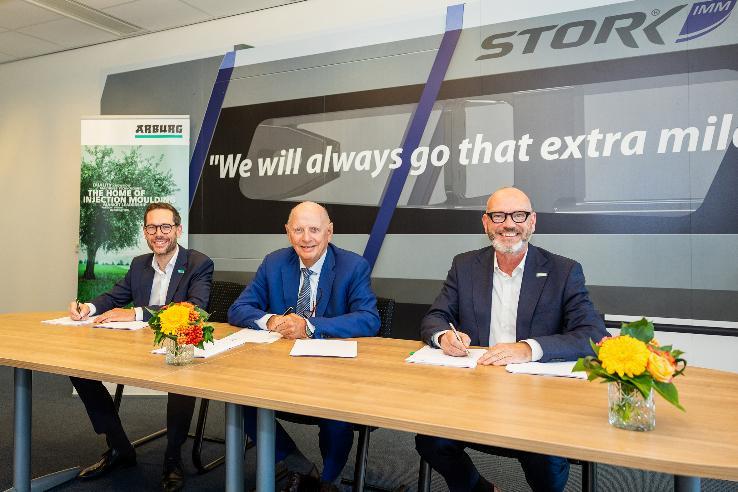
Expansion for the future Arburg acquires Stork IMM A historic moment: On 29 July 2026, CFO Steffen Kroner and CTO...
Robotics & automation
Plastics manufacturing
Fluid connectors
Printing technologies
Robotics and Automation
Springs look simple, but in bulk feeding they are one of the most challenging components to automate. Here is why they jam, tangle and misorient, and how FlexiBowl flexible feeding makes spring handling reliable.
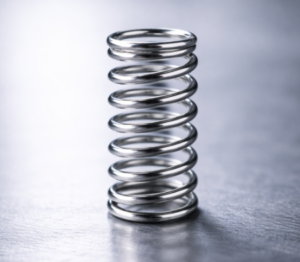
Springs are one of the most common components manufacturers ask us to feed, and also one of the most underestimated. In automation, they behave unpredictably and can quickly cause stoppages.
FlexiBowl uses a flexible, vision guided approach to separate, orient and present parts consistently to robots. Instead of forcing parts into a fixed mechanical path, the system adapts to how the part behaves.

In the example below, feeding is only part of the story. The system is built around an indexing table that moves each semi finished part through eight stations. Flexible feeders and SCARA robots perform feeding, handling and assembly from start to finish.
Controlled movement through multiple stations for consistent cycle timing.
Vision based presentation that reduces tangling and misorientation.
Fast, repeatable handling and assembly in a compact footprint.
If the embedded LinkedIn video does not display due to browser privacy settings, you can also open it directly in LinkedIn.
Flexible feeding combined with robotics helps Australian manufacturers reduce downtime and support high mix production. If you are dealing with springs, clips, seals, fasteners or other unstable components, there is a proven path to a more reliable feed and assembly process.
Tell us about your part size, material, target cycle time and downstream process. We will suggest the right FlexiBowl configuration and integration approach for your application.
Expansion for the future Arburg acquires Stork IMM A historic moment: On 29 July 2026, CFO Steffen Kroner and CTO...
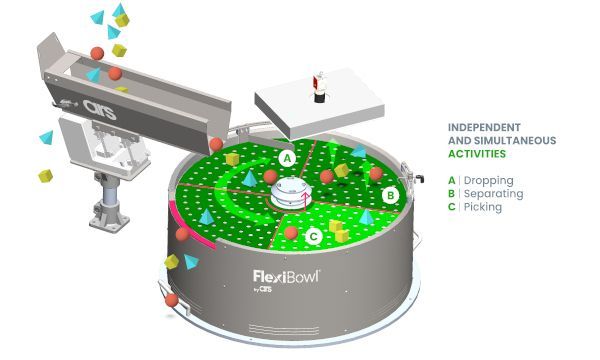
Vibratory Bowl Feeder vs Flexible Feeder | Comtec Australia Home›Robotics & Automation›Bowl Feeder vs Flexible Feeder Parts Feeding Vibratory Bowl...
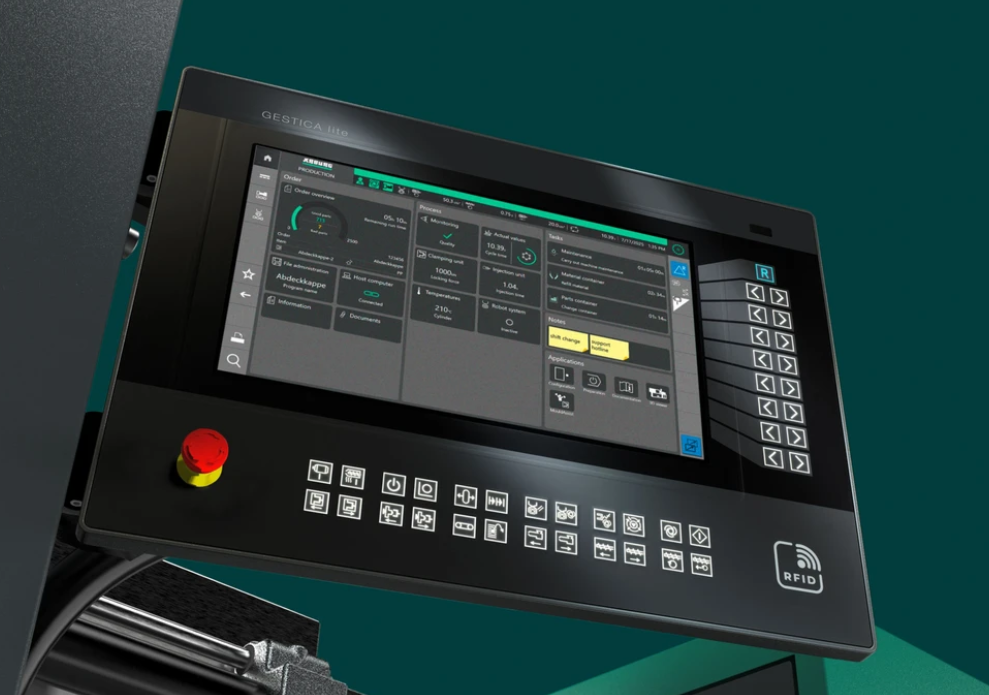
ARBURG ALLROUNDER TREND – GESTICA lite | Comtec Australia ARBURG ALLROUNDER TREND The new standard ininjection moulding. We have expanded...


